



| Pokličite nas | |
 | 01 200 92 00 |
 | Kladezna ulica 10, 1000 Ljubljana |
 | 01 200 92 00 |
 |  [email protected] [email protected] |
| Vem informator Prijavite se na VEM e-novice in obvestila, spremembe zakonodaje in druge novosti ter novice za uspešno ustanovitev in upravljanje podjetja prejemajte na vaš e-naslov. |
Some interesting information on cooperation and relationship between Republic of Slovenia and Russian Federation
Do you know how many Russians live in Slovenia? Or visit Slovenia? What are Slovenia's exports/imports to/from the Russian Federation?
Do you know how many Russian tourists visit Slovenia and make overnight stays in our country? What are Slovenia' exports/imports to/from the Russian Federation? How many Russians are there among the Slovene population? What is their age structure, their educational structure, their employment status? In which of the Slovene statistical regions do they live? How many upper secondary school pupils learn Russian?
Russia, one of the most important trading partners of Slovenia
Slovenia's exports to Russia in 2015 amounted to EUR 792.0 million and imports to EUR 230.0 million. Since Slovenia’s accession to the EU trade with Russia was constantly growing. A drop in trade was recorded during the financial and economic crisis; the maximum value was reached in 2013 (EUR 1,018.5 million or 4.7% of Slovenia’s total exports and EUR 451.5 million or 2.0% of Slovenia’s total imports). By 2015, this value again slightly fell; it amounted to 3.3% of Slovenia's total exports and 1.0% of Slovenia’s total imports.
Despite the fall in trade, Russia is still one of the most important trading partners of Slovenia; it ranks seventh in total Slovenia’s exports in 2015, and first as regards trade with EU non-member countries. More than 70% of the value of trade with Russia is represented by exports. The largest share, more than half of exports to Russia, was contributed by medical and pharmaceutical products, electrical machinery and appliances, and general industrial machinery and equipment. Almost 85% of imports from Russia were natural and manufactured gas, petroleum and petroleum products, and non-ferrous metals.
Infographic 1: Exports to Russia by commodity divisions of the SITC1), Slovenia
1) Standard International Trade Classification
Source: SURS
Infographic2:Imports from Russia by commodity divisions of the SITC1), Slovenia
1) Standard International Trade Classification
Source: SURS
Russian tourists generate 3% of all foreign tourist overnight stays in Slovenia
In 2015 tourists from the Russian Federation generated more than 44,000 tourists arrivals and 225,000 tourist overnight stays, which is 3 % of all foreign overnight stays in Slovenia. Tourists from the Russian Federation were ranked seventh in terms of foreign tourist overnight stays in Slovenia. The number of their overnight stays doubled in the 2009–2012 period (from 164,000 to 350,000), but after 2013 it declined.
Russian tourists stay in Slovenia twice as long as other foreign tourists (in 2015 foreign tourists spent on average in Slovenia 2.4 nights, Russian tourists 5.1 nights).
In 2014, tourists from the Russian Federation generated 41% of their overnight stays in health (spa) resorts (almost three quarters of them in municipality Rogaška Slatina), 30% in seaside resorts, 11% in mountain resorts and 10% in municipality Ljubljana.
Russian tourists mostly stay in hotels (84% of all their overnight stays).
In the last 5 years the number of Russian nationals in Slovenia has more than tripled
On 1 January 2016 there were 1,998 residents with Russian citizenship in Slovenia. Their number has more than tripled in the last 5 years: in 2011 it was below 600. The large increase of the number Russian nationals among the population in Slovenia is mostly the result of immigration, as many more have immigrated to Slovenia than emigrated from it. In 2014 the migration increase of Russian nationals stood at almost 400 persons. (Data on migration flows in 2015 will be published on 21 July 2016.)
Over half of the Russian nationals in Slovenia were younger than 40 years, among them there were also about 360 children under 15 years of age. In 2015, 61% of Russian nationals in Slovenia aged 15+ were employed and 5% were pupils and students. Among the Russian nationals aged 25–64 the share of those with tertiary education was 53%; for the entire Slovene population it was 23%.
At the beginning of 2016, Russian nationals lived in all statistical regions of Slovenia. Over 55% of them lived in the Osrednjeslovenska statistical region; in it the Russians stood for over 3% of all foreign citizens. The Obalno-kraška statistical region was also quite popular among the Russians; 3% of all foreigners there were Russian nationals.
Russian is taught in Slovene upper secondary schools
In the 1980s almost 1,200 pupils learnt to speak Russian, mostly in grammar schools. At the introduction of vocational secondary schools the enthusiasm to learn Russian started to decrease. In the 1985/86 school year 826 pupils were learning Russian, in 1990/91 only 215, whereas in 2000/01 Russian was no longer taught in upper secondary schools in Slovenia.
From the 2005/06 school year on the interest in learning the Russian language is on the rise: from 142 pupils in the stated year to over 400 pupils learning Russian as their second or third foreign language in the last year and also about 300 pupils learning Russian as their third foreign language.

Gospodarska zbornica za pospeševanje tujih neposrednih investicij in internacionalizacijo
je specializirana za podporo in razvoj poslovanja tujih podjetij in podjetnikov ter investicij na območju republike Slovenije, regiji Adria, ter tudi drugih državah članicah EU.
podpora pri vstopu na trg
celoten spekter svetovalnih in podpornih storitev (pravne, davčne, finančne)
podpora poslovanju (računovodstvo, kadrovske storitve, marketing)
Some interesting information on cooperation and relationship between Republic of Slovenia and Russian Federation
Do you know how many Russian tourists visit Slovenia and make overnight stays in our country? What are Slovenia' exports/imports to/from the Russian Federation? How many Russians are there among the Slovene population? What is their age structure, their educational structure, their employment status? In which of the Slovene statistical regions do they live? How many upper secondary school pupils learn Russian?
Kako pridobiti otroški dodatek?
Otroški dodatek je dopolnilni prejemek za preživljanje, vzgojo in izobraževanje otroka. Pravico do otroškega dodatka uveljavljate pri centru za socialno delo, kjer imate stalno prebivališče oziroma kjer večina dejansko prebiva (če imajo stalno ali začasno prebivališče na različnih naslovih).
Oddaja pooblastil za postopek nadomestila plače v e-VEM S 1.10.2016 bo možno elektronsko vlaganje zahtevkov za nadomestilo plače prek e-VEM. Zahtevki se bodo v e-VEM lahko vlagali na dva načina, in sicer prek:
1. portala e-Vem in
2. vmesnika za nadomestila e-Vem (eNDM).
Vlaganje zahtevkov prek sistema e-Vem bo prostovoljno, kar pomeni, da bo uporabnik lahko zahtevke še vedno vložil fizično, na ZZZS izpostavavah. Preberi več...
| |
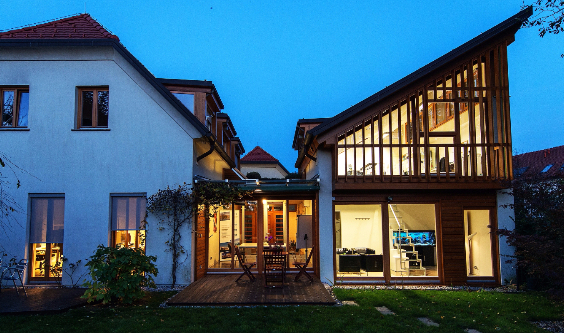
Kje je in bo evropski denar za lesno industrijo
Podjetji M Sora in Proform sta le dve od slovenskih podjetij v lesni industriji, ki sta denar za razvojne projekte pridobili prek uspešne prijave na razpise v Bruslju. Sicer pa bo za lesno industrijo v Republiki Sloveniji na voljo 50 milijonov evrov iz evropskih skladov.
| |
| PARTNERJI |      |
V tem trenutku aktivno vodimo projekte neposrednih investicij v Republiko Slovenijo v skupnem znesku 10 milijonov EUR.
Pri našem delu sodelujemo z večjimi poslovnimi sistemi v Sloveniji.
Izdelava spletne strani Spletnik